A renovation usually starts with a clear goal and turns complicated fast. One contractor says the layout needs to change. A designer has a different opinion. Pricing shifts after plans are drawn. Timelines stretch because decisions are split between separate teams. That is exactly why design build home renovation has become the preferred approach for homeowners who want better control, clearer communication, and a finished space that works the way it should.
For kitchen remodels, bathroom updates, additions, ADUs, and full interior transformations, the biggest advantage is simple. The same team handles the design, the construction planning, and the build itself. That changes the entire experience. Instead of managing handoffs between separate companies, the client works with one accountable contractor from concept through completion.
What design build home renovation really means
In a traditional renovation model, design and construction are often separated. You might hire a designer or architect first, finalize plans, and then start looking for a builder. On paper, that sounds organized. In practice, it can create gaps between what looks good in drawings, what fits the budget, and what can actually be built efficiently.
A design build home renovation approach brings those parts together from the start. Design decisions are made with real construction knowledge behind them. Budget discussions happen earlier. Material choices, layout changes, structural needs, and scheduling are evaluated as one connected process rather than a series of disconnected steps.
That does not mean every project becomes easier overnight. Renovation still involves unknowns, especially in older homes. But it does mean problems are usually caught earlier, before they turn into expensive changes in the field.
Why homeowners choose design build home renovation
Most property owners are not looking for a complicated process. They want a kitchen that functions better, a bathroom that feels updated, an addition that blends with the home, or an ADU that makes smart use of the property. They also want someone to take ownership of the work.
That is where design-build stands out. When one company is responsible for both the vision and the execution, there is less room for finger-pointing. If a plan needs adjustment, the people making the decision are already at the table. If a finish choice affects installation time or cost, that conversation happens before it creates a delay.
For clients investing serious money into their property, this matters. Renovation is not just about style. It is about function, durability, code compliance, scheduling, and protecting the value of the home. A contractor-led process keeps those priorities in focus.
The biggest benefits of a contractor-led process
The clearest benefit is accountability. A single team owns the schedule, the budget framework, the design coordination, and the construction outcome. That saves time, but more importantly, it reduces confusion.
Communication also improves. Homeowners are not stuck relaying messages between a designer, draftsman, cabinet maker, and builder. Questions move faster. Decisions are documented more clearly. Expectations stay aligned because the same team is looking at the full project, not just one piece of it.
Budget control tends to be stronger as well. This is not the same as saying the lowest price wins. Premium renovations require skilled labor, quality materials, and careful planning. But design-build helps clients make informed choices earlier, when changes are less expensive to make. It is far better to adjust scope during design than after framing, plumbing, or tile work has already started.
There is also a practical craftsmanship advantage. A builder with renovation experience understands how details come together in the field. Cabinet clearances, door swings, lighting placement, structural modifications, and finish transitions all matter. Good design should not stop at appearance. It should hold up under daily use and be executed with precision.
Where this model makes the most sense
Not every project needs a full design-build process. If a homeowner is replacing a vanity, swapping out flooring, or making a few limited updates with no layout changes, a smaller remodel path may be enough.
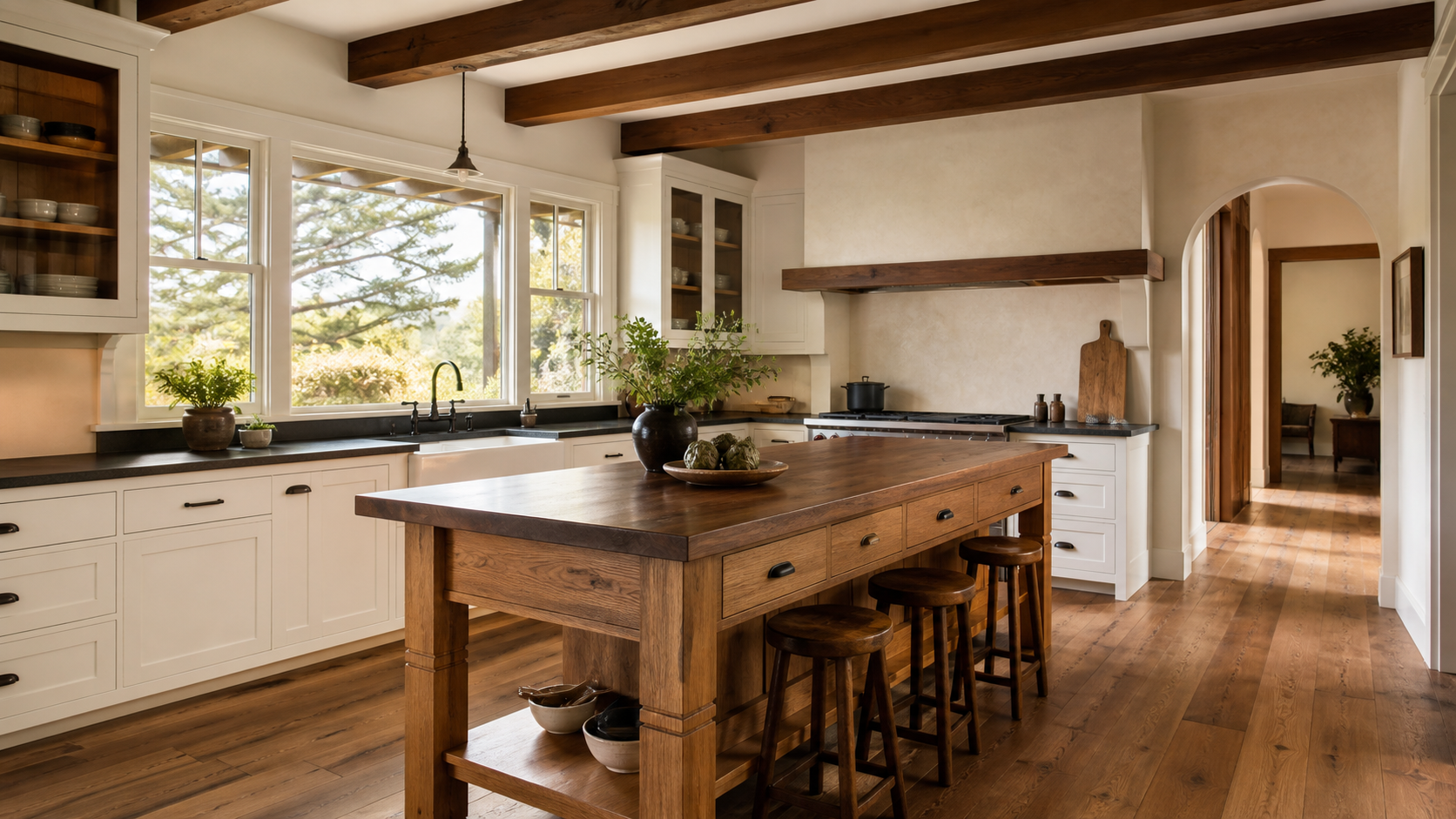
But when the renovation affects multiple systems or changes the way the space functions, design-build becomes far more valuable. Kitchens are a strong example because they combine cabinetry, electrical, plumbing, appliances, lighting, and traffic flow. Bathrooms have the same coordination challenges in a smaller footprint, where mistakes show up quickly. Additions and ADUs raise the stakes even further because they involve structural planning, permits, exterior integration, and long-term use considerations.
Older homes across the Central Coast often come with another layer of complexity. Existing conditions may not match assumptions. Framing may need correction. Plumbing and electrical systems may need upgrades. A team that designs with construction realities in mind is better positioned to respond without losing control of the project.
Trade-offs to understand before you start
Design-build is not about removing every hard decision. It is about making those decisions in a more coordinated way.
Some homeowners assume they need separate design and construction firms to get a more custom result. In reality, the opposite is often true. A well-run design-build contractor can deliver highly custom work because the design is developed alongside the people who know how to build it properly. Custom cabinetry, built-ins, space planning, and finish selection all benefit from that close coordination.
That said, the model depends on the quality of the contractor. If the company is weak on communication or thin on project management, putting everything under one roof will not fix that. Experience matters. Process matters. The team should be able to explain how selections are handled, how pricing is developed, what happens when conditions change, and who is responsible for each phase.
Price expectations also need to be realistic. A design-build firm focused on craftsmanship and dependable execution may not be the cheapest option. For many clients, that is the point. They are not only buying labor. They are buying planning, coordination, quality control, and a cleaner path from idea to finished space.
What to look for in a design-build contractor
Start with experience in the type of renovation you actually need. A company that understands kitchens may not be the right fit for an addition. A team that handles cosmetic updates may not be equipped for structural work, ADUs, or major reconfigurations.
Then look at how they talk about process. A strong contractor should be able to walk you through design development, budgeting, scheduling, permitting, selections, and construction oversight in plain terms. If those answers are vague, expect problems later.
Craftsmanship should also be visible in their work and in how they describe it. Details matter in renovation. Alignment, finish quality, fit, and consistency do not happen by accident. They come from standards. They come from supervision. They come from builders who take pride in getting the small things right.
Local knowledge is another advantage, especially when permits, site conditions, and regional building expectations affect the job. In places like Paso Robles and the surrounding area, homeowners benefit from working with a contractor who understands how to move projects from concept to completion without unnecessary delays.
A better renovation experience starts before construction
The best renovation projects are not the ones with no surprises. They are the ones where surprises are handled well because the process was built to absorb them. That is what makes design-build so effective. It creates one line of responsibility and gives the homeowner a clearer path through decisions that would otherwise feel fragmented.
For clients who care about quality, schedule discipline, and a finished result that reflects both design intent and construction skill, this approach makes practical sense. It keeps the project grounded in real numbers, real building conditions, and real accountability.
At its best, design build home renovation is not just a delivery method. It is a better way to protect the investment you are making in your property and to make sure the finished space earns its place in your daily life.